



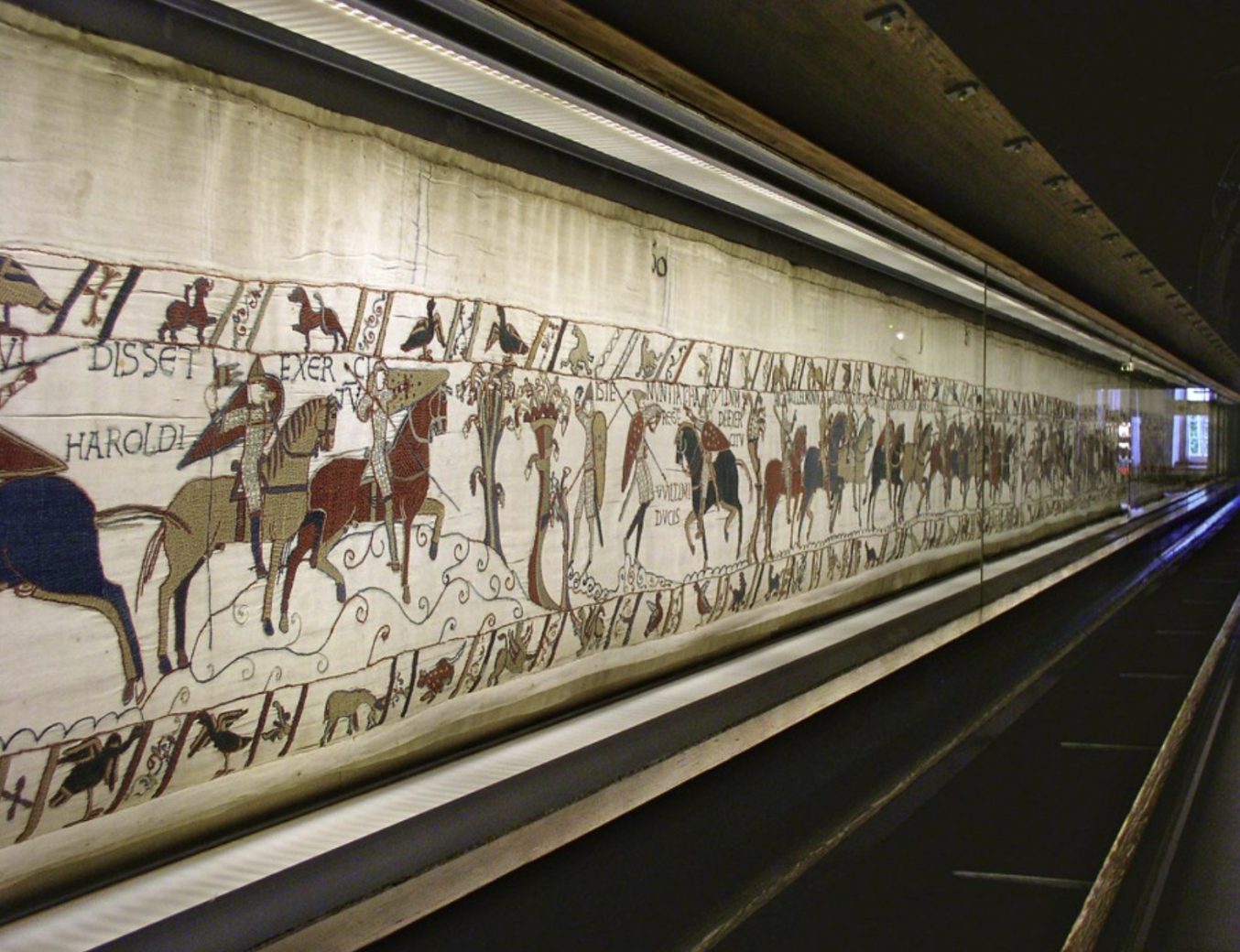
The hottest ticket in London right now is a 70-meter strip of linen. Stitched nearly 1,000 years ago, the Bayeux Tapestry arrives in Britain and people queue as if for a drop. In an age of frictionless images, this thing is linen and wool, labor and time. In other words, the oldest kind of scroll.
It behaves uncannily like a feed. Scenes unspool left to right: ships, horses, food, costume, sex and violence, even a comet. There are captions. There’s a point of view and a lot left out. It’s edited.
That parallel is easy, and it’s still not a gimmick. The tapestry was propaganda, an image designed to fix a version of events. That’s familiar. What feels different is pace. An object made slowly, by many hands, that still compels presence. You can’t double-tap it. You walk it.
Maybe that’s the jolt. In a culture of endless scroll, an older scroll that refuses speed. Slow as resistance. If it’s ephemera, it’s ephemera that asks us to linger.